
.png)
.png)
Post-Storm Plumbing Inspection Checklist for Pasadena Properties
- Haik Petrosyan

- 7 days ago
- 8 min read
Heavy rains test every component of your home's plumbing system. Water saturation shifts soil, increases pressure on underground pipes, and exposes weaknesses that may have developed over the years. For Pasadena homeowners, where many properties were built between the 1940s and 1990s, post-storm inspections aren't optional maintenance tasks. They're necessary safeguards against structural damage and costly emergency repairs.
E.T. Plumbing has responded to countless storm-related service calls across the San Gabriel Valley, and we've seen a consistent pattern: homeowners who conduct systematic inspections after heavy weather catch problems early, while those who wait often face water damage, foundation issues, and repair bills that could have been prevented. This checklist walks you through what to examine, what warning signs demand immediate attention, and when professional leak detection becomes necessary.

Why Post-Rain Plumbing Inspections Matter for Southern California Homes
Pasadena receives approximately 20 inches of rainfall annually, with 75-80% concentrated between November and March according to National Weather Service data. This seasonal concentration creates specific challenges for residential plumbing infrastructure. Single winter storms can deliver 3-5 inches in 24 hours, saturating soil that's been dry for months and creating conditions that stress aging pipe systems.
Underground pipes experience three primary storm-related stresses. Soil expansion from water absorption creates lateral pressure on supply lines and sewer laterals. Temperature fluctuations cause pipe materials to contract and expand at different rates than the surrounding soil. Increased water table elevation during extended rain periods can lift pipes, separate joints, and compromise seals that have degraded over decades of service.
Storm Impact | Immediate Effect | Long-term Consequence |
Soil saturation | Lateral pressure on pipes | Joint separation, stress fractures |
Temperature drops | Material contraction | Seal degradation, crack formation |
Water table rise | Pipe displacement | Slope changes, backup risk |
Erosion patterns | Exposed pipe sections | Accelerated corrosion, physical damage |
The cost differential between preventive inspection and emergency response is substantial. According to the Insurance Information Institute, the average water damage insurance claim ranges from $12,000-$14,000, while professional inspections typically cost a fraction of that amount. More importantly, early detection allows for scheduled repairs during normal business hours rather than emergency service rates.
Properties in the San Gabriel Valley may face additional plumbing considerations, especially in older homes built between 1940 and 1980, where galvanized steel and cast iron piping were commonly used and may now be approaching or exceeding typical service life. When these aging materials experience storm-related stress, failure rates increase dramatically.
Visible Water Damage: What to Look for Inside Your Home
Your home's interior surfaces provide the first indicators of plumbing problems developing behind walls, beneath floors, or above ceilings.
Ceiling and Wall Inspection
Start with ceiling examination in rooms directly below bathrooms, water heaters, and second-story plumbing fixtures. Water stains appear as yellowish or brownish discoloration, often with darker edges where moisture has wicked into drywall or plaster. Fresh leaks create lighter, more saturated appearances, while older damage shows defined boundaries with darker perimeters.
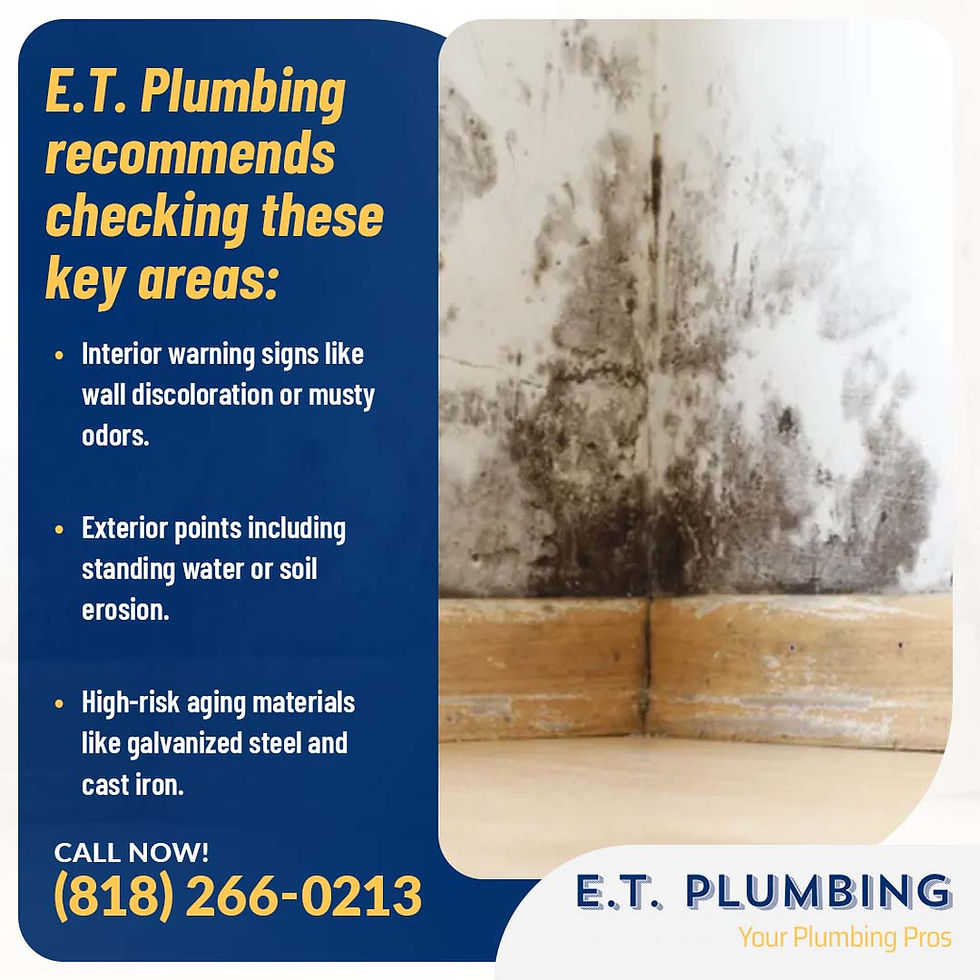
Texture changes matter as much as color. Run your hand along suspected areas to detect softness, bubbling, or paint that feels loose from its backing surface. Bulging sections indicate water has accumulated behind the surface layer. Trust your sense of smell, too. Musty, earthy odors signal moisture presence even when visual evidence isn't obvious.
Floor and Baseboards
Floor inspection requires attention to subtle changes. Wood floors show warping, cupping (edges higher than centers), or crowning (centers higher than edges) when exposed to moisture from below. Vinyl and laminate flooring develops bubbles or separation at seams. The carpet may feel damp or smell musty without showing obvious water presence.
Baseboards reveal moisture through paint bubbling, wood swelling, or separation from walls. In homes with crawl spaces, examine whether baseboards show water lines or staining patterns that indicate rising moisture rather than splash patterns from normal use.
Fixtures and Drains
Post-storm drain performance changes indicate potential problems in your waste system. Slow drainage that wasn't present before rain events suggests debris infiltration or partial blockages. Gurgling sounds from drains point to ventilation issues or developing clogs that restrict airflow through the system.
Water backing up in unexpected locations signals serious concerns. If flushing an upstairs toilet causes your downstairs shower to gurgle or show water, your main drain line is experiencing backup conditions that will worsen without intervention.
Callout: A single undetected leak can waste up to 10,000 gallons of water annually and cause thousands in structural damage.
Checking Your Property's Exterior Drainage and Sewer Access Points
Outside inspection reveals how stormwater interacted with your property's plumbing infrastructure.
Foundation Perimeter
Walk your foundation, looking for these key indicators:
Standing water that remains 24-48 hours after rain stops, indicating poor grading or subsurface drainage problems
Soil erosion patterns such as deep channels or exposed pipe sections showing concentrated water flow
Foundation cracks or separation at foundation-to-slab joints providing pathways for water infiltration
Persistent soil saturation against your foundation creating hydrostatic pressure
Ground settling or depressions near the foundation perimeter
Poor drainage around foundations creates hydrostatic pressure that can force water through concrete and stress underground plumbing connections. According to the American Society of Home Inspectors, drainage and grading issues are among the common problems identified during home inspections. Foundation repair costs typically range from $4,000-$15,000 depending on the extent of damage and required remediation work.
Cleanout Caps and Sewer Access
Locate your sewer cleanout caps (typically 4-inch diameter screw-on covers at ground level) and check for:
Water staining around caps, indicating sewage backup during the storm
Standing water or sewage, visible when caps are removed
Unusual sulfur-like odors near cleanout locations, signaling sewer gas escape
Ground saturation around underground sewer lines
Displaced or damaged cleanout covers from soil movement
Downspouts and Grading
Effective drainage requires systematic evaluation of water flow patterns:
Downspout discharge points should direct water at least 5-6 feet from the foundation
Ground slope must create positive drainage away from the structure (test with a marble to verify water flows away)
Gutter conditions free of debris that causes overflow against foundations
Extension positioning to verify that downspout extensions remain properly placed during storms
Erosion patterns in landscaping indicating concentrated water flow paths
When to Call for Professional Leak Detection Services
Modern leak detection technology has transformed how professional plumbing services in Los Angeles locate problems without invasive investigation that damages finished surfaces.
E.T. Plumbing uses advanced detection methods, including:
Thermal imaging cameras that detect temperature variations indicating water presence behind walls or beneath floors
Acoustic detection equipment using sensitive microphones to identify ultrasonic frequencies from pressurized leaks
Pressure testing systems that isolate specific plumbing sections to determine which zones need investigation
Video inspection technology for examining pipe interiors and identifying blockages or damage
Moisture mapping tools that create comprehensive assessments of water intrusion patterns
DIY methods miss problems for several reasons. Visual inspection only captures leaks that have already created visible damage, meaning water loss and structural deterioration have occurred before detection. Moisture meters available to homeowners lack the sensitivity and calibration of professional equipment. Most importantly, homeowners searching online for “plumber near me” don't have the technical knowledge to interpret findings correctly or understand which symptoms indicate serious problems versus minor issues.
Red Flags Requiring Immediate Attention
Contact a residential plumber in Pasadena immediately if you notice:
Water bill increases exceeding 15-20% without corresponding usage changes
Hot spots on floors (particularly on concrete slabs) indicating slab leaks beneath the foundation
Running water sounds when all fixtures are off, and the water meter shows continuous movement
Wet spots in your yard that don't dry out between rain events
Sudden pressure drops in the water supply or inconsistent water flow
Visible pipe corrosion on exposed sections in crawl spaces or basements
Unexplained foundation cracks that have appeared or widened after storms
Time sensitivity matters with post-storm leaks. What starts as minor seepage can rapidly escalate into structural damage, mold growth, or complete pipe failure requiring emergency response at premium rates.
Understanding Pipe Repair Needs After Heavy Rain Exposure
Storm exposure accelerates deterioration in aging pipe materials and can cause immediate failures in already-compromised systems.
How Storms Accelerate Pipe Deterioration
Soil movement during saturation and subsequent drying creates shear forces on rigid pipe materials. Cast iron and galvanized steel, common in Pasadena homes built before 1970, lack the flexibility to accommodate these forces without developing stress fractures. Over multiple storm cycles, small cracks propagate into larger failures.
Temperature fluctuations compound mechanical stress. When ambient temperatures drop during rain events, metal pipes contract faster than the surrounding soil contracts. This differential movement strains joints, loosens seals, and creates microscopic separations that grow with each temperature cycle.
Increased water pressure during storms tests weak points in your system. Municipal water pressure can spike during heavy rain as treatment facilities process higher volumes. These pressure surges strike aging pipes that have thinned from decades of internal corrosion, sometimes causing immediate ruptures at vulnerable locations.
Repair vs. Replacement Decision Factors
Age drives replacement decisions more than current condition. Once galvanized steel or cast iron reaches 60-70% of expected lifespan, repair costs approach replacement expenses when accounting for multiple service calls over the coming years.
E.T. Plumbing provides honest assessments that weigh repair viability against long-term solutions. When one section fails in a 50-year-old galvanized system, similar failures in adjacent sections typically occur within months. Whole-system replacement using modern materials eliminates ongoing repair cycles and provides decades of reliable service.
Damage location and extent matter. Accessible pipe repairs in crawl spaces or exposed areas cost substantially less than breaking concrete slabs or removing finished walls. Sometimes, targeted replacement of accessible sections using modern materials makes sense even when the full system hasn't failed.
Modern pipe materials offer substantial advantages. PEX (cross-linked polyethylene) provides flexibility that accommodates minor ground movement without stress fractures. Copper maintains longevity when proper water chemistry exists. PVC waste lines resist corrosion and root infiltration while providing smooth interior surfaces that minimize clog formation.
Creating Your Post-Storm Action Plan for Future Weather Events
Systematic inspection within 48-72 hours after storm events catches problems at early, manageable stages. Follow these steps to protect your property:
Immediate Interior Inspection (0-24 hours after storm):
Check ceilings, walls, floors, and fixtures following the protocols outlined above
Document any changes with dated photographs for insurance purposes
Capture evidence that proves valuable if a professional evaluation reveals coverage-worthy damage
Look for new stains, moisture, or performance changes that weren't present before the storm
Exterior Inspection (24-48 hours after storm):
Wait until standing water drains and muddy conditions stabilize before walking around foundations
Avoid compacting saturated soil, which worsens drainage problems and creates water-retention low spots
Examine foundation perimeter, cleanout caps, and drainage systems systematically
Note any changes in grading, erosion patterns, or water flow
Insurance Documentation Protocol:
Photograph water staining, structural damage, or standing water from multiple angles
Include close-ups showing detail and wider shots establishing context
Date-stamp photos using your phone's metadata or by placing newspapers showing dates in frames
Contact your insurance carrier promptly, as many policies require notification within specific timeframes
Professional Relationship Building:
Establish connections with plumbing services before emergencies arise to save time and stress when problems develop
Benefit from priority scheduling as an established customer
Work with service providers already familiar with your property's plumbing configuration for a more efficient urgent response
Seasonal Preparation Checklist
Schedule a plumbing inspection during the dry summer months to catch vulnerabilities before the rainy season begins. Keep gutters and downspouts clear so water drains away from your foundation. Make sure your main water shutoff works properly by testing it once a year. Keep E.T. Plumbing’s contact information - easy to find so you can act quickly in an emergency.
Schedule Your Post-Storm Plumbing Inspection in Pasadena and Nearby Communities
Don't wait for small problems to become expensive emergencies. Our team provides thorough post-storm inspections using advanced leak detection technology and honest assessments of your system's condition.
Based in Pasadena, we offer comprehensive plumbing services in Los Angeles County and nearby communities, including Alhambra, La Cañada Flintridge, Glendale, Arcadia, San Marino, Monrovia, Altadena, Temple City, Sierra Madre, and surrounding areas. Whether you're searching for a “plumber near me” or need an experienced residential plumber in Pasadena, we're available 24/7 for emergencies. E.T. Plumbing backs every job with our 100% workmanship guarantee.
Call (818) 266-0213 to schedule your post-storm plumbing assessment.
Comments